


Internal Sustainability Report 2025
This Internal Sustainability Report has been prepared following the annual review of sustainability performance and in line with Travelife requirements. The report summarises environmental, social and management performance, compares results with the previous reporting period and identifies priorities for 2026.
1. Sustainability Management Review
The hotel reviewed its sustainability performance using EPIT environmental data, utility records, operational information and management reviews. The results were used to update the Sustainability Assessment and Sustainability Action Plan.
2. Key Performance Indicators (2024 vs 2025)
| Indicator | 2024 | 2025 | Change | Assessment |
|---|---|---|---|---|
| Energy Consumption (kWh) | 396.513 | 415.266 | +4.7% | Increase linked to higher occupancy. |
| Water Consumption (m³) | 6.314 | 6.546 | +3,67% | Full-year monitoring now available. |
| GHG Emissions (kg CO₂e) | 124.486 | 125.207 | +0,58% | Increase lower than guest-night growth. |
| Guest Nights | 23.301 | 26.127 | +12,1% | Higher occupancy achieved. |
| GHG per Guest Night | 5,34 | 4,79 | -10,30% | Environmental efficiency improved. |
3. Environmental Performance Analysis
Energy consumption increased compared with the previous period, primarily due to higher occupancy levels and hotel activity. Despite this increase, emissions per guest night improved, demonstrating better environmental efficiency.
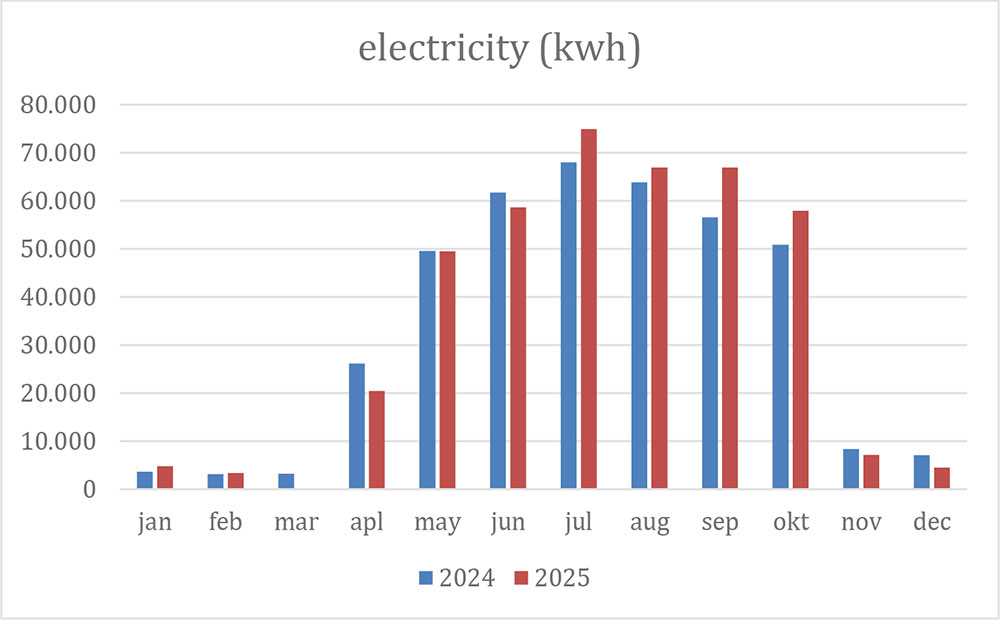
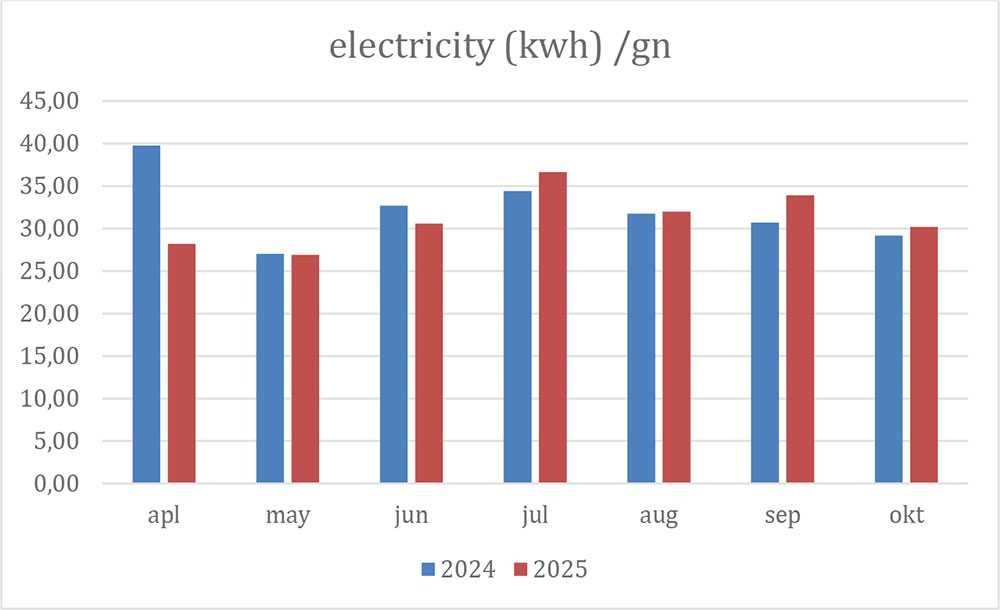
in addition to monitoring total electricity consumption, the hotel evaluates electricity use per guest night as a key efficiency indicator. The comparison between 2024 and 2025 shows improved performance during the beginning and end of the operating season, particularly in April and June. However, higher electricity consumption per guest night was recorded during the peak summer months, especially in July and September.
Management considers this indicator particularly important as it reflects operational efficiency independently of occupancy levels. During 2026, the hotel will continue to investigate opportunities to reduce electricity consumption per guest night through improved operational controls, staff awareness and energy efficiency measures.
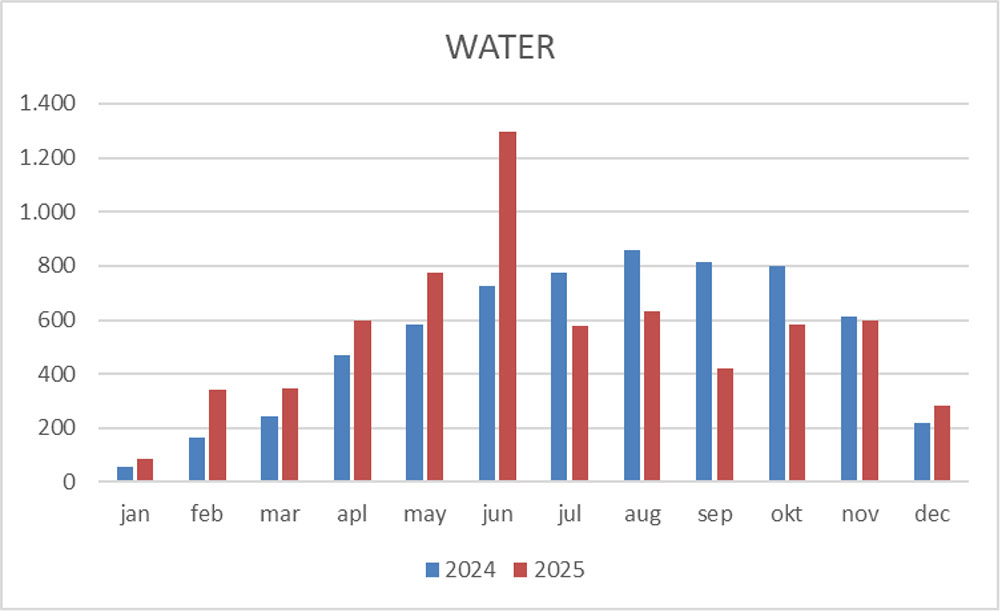
Water consumption continued to be monitored through EPIT and utility invoices. Monthly monitoring procedures have been strengthened, and internal water-meter checks have been introduced to improve data quality.
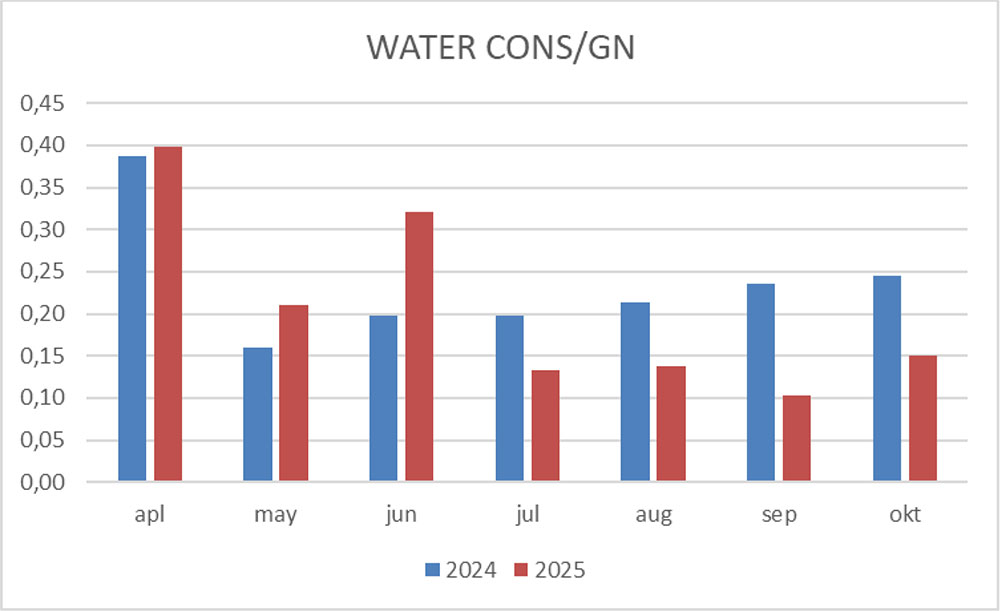
Water consumption per guest night is one of the hotel's most important environmental performance indicators, as it measures resource efficiency independently of occupancy levels.
The comparison between 2024 and 2025 shows a significant improvement during the main operating season. From July to October 2025, water consumption per guest night was consistently lower than during the corresponding period of 2024, demonstrating improved water efficiency despite continued hotel activity.
Higher consumption levels were recorded during May and June 2025.
The increase in water consumption observed in June is attributed to water scarcity conditions in the area, which led to an interruption in the supply of water from the dam. This water source is normally used for swimming pool filling and garden irrigation. As a result, the hotel relied more heavily on mains water supply, leading to higher recorded consumption.
Regarding the variation in energy consumption compared to 2024, this is mainly linked to the increased operation of air-conditioning (AC) systems during the current period, due to higher temperatures and increased operational demand.
Overall, the results indicate that the hotel's water management practices have become more efficient during the peak operating months and that continued monitoring through EPIT and internal water meters will support further improvements.
Although total water consumption varied between the two reporting periods, water consumption per guest night improved significantly during the peak season. This suggests a positive trend in operational water efficiency and supports the hotel's objective of reducing resource consumption intensity over time.
Waste management remains a priority area. The hotel continues to improve waste separation, recycling and staff awareness in order to reduce environmental impacts.
Greenhouse Gas Emissions per Guest Night
Greenhouse gas emissions per guest night are considered one of the most important sustainability indicators, as they demonstrate the environmental impact of hotel operations independently of occupancy levels.
The comparison between 2024 and 2025 shows an overall improvement in emissions intensity during most of the operating season. Significant reductions were achieved during April, May, June and August, while July remained broadly stable compared with the previous year.
A temporary increase was observed during September 2025, reflecting higher energy consumption per guest night during that period. Management will continue to investigate operational factors influencing emissions performance and identify opportunities for further efficiency improvements.
Overall, the results indicate a positive trend in environmental performance, with lower greenhouse gas emissions per guest night across most of the reporting period.
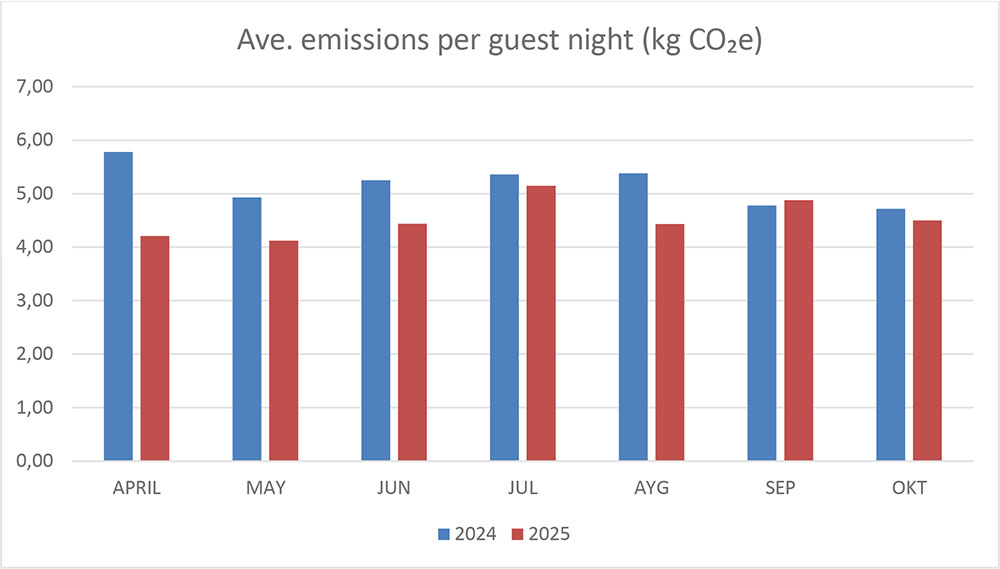
The reduction in greenhouse gas emissions per guest night demonstrates that the hotel has improved its environmental efficiency despite variations in occupancy and operational demand. Continued monitoring through EPIT and implementation of resource-efficiency measures will support further reductions in emissions intensity during 2026.
The 2025 sustainability review shows that, despite increased occupancy and operational activity, the hotel achieved improvements in several key efficiency indicators. Water consumption per guest night and greenhouse gas emissions per guest night showed positive trends compared with the previous reporting period, demonstrating improved environmental efficiency. Areas requiring further attention include electricity consumption during peak season and continued reduction of emissions intensity. These findings have been used to establish the sustainability objectives and action plan for 2026.
4. Social Performance
The hotel continued to support local employment, local suppliers and responsible tourism throughout the reporting period.
During the 2025 operating season, Enorme Santanna Beach employed a total of 52 staff members, of whom 32 were women (61.5%) and 20 were men (38.5%). The hotel continued to promote workforce diversity and equal opportunities by employing 15 foreign employees, including 10 women and 5 men, representing approximately 28.8% of the total workforce. The overall workforce composition included 22 Greek women, 10 foreign women, 15 Greek men, and 5 foreign men, reflecting the hotel’s commitment to an inclusive and diverse working environment.
Recruitment, training and employment practices were based on equal opportunities, fairness and non-discrimination, regardless of gender, nationality, age, religion or other personal characteristics. The hotel remained committed to providing a safe, respectful and inclusive working environment for all employees.
Staff received sustainability-related information and awareness training, while guests were encouraged to participate in environmental initiatives including water conservation, waste reduction, beach-cleaning activities and sustainability awareness campaigns. Through these actions, the hotel continued to strengthen its social responsibility performance and contribute positively to the local community.
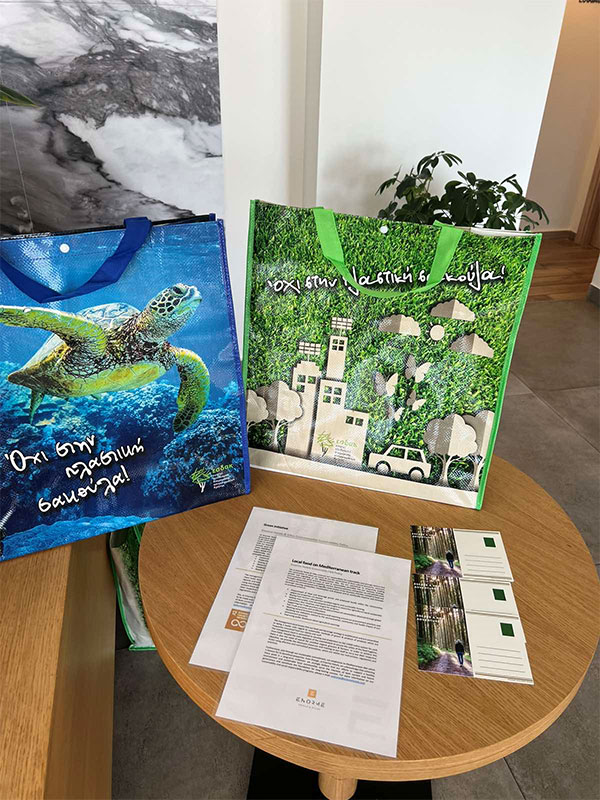
Guests were encouraged to participate in environmental initiatives through sustainability information displayed throughout the hotel, environmental awareness materials, biodiversity information and responsible tourism guidance. Through these actions, the hotel continued to strengthen its social responsibility performance and contribute positively to the local community.
Staff Composition 2025
Gender and nationality breakdown of employees in 2025.
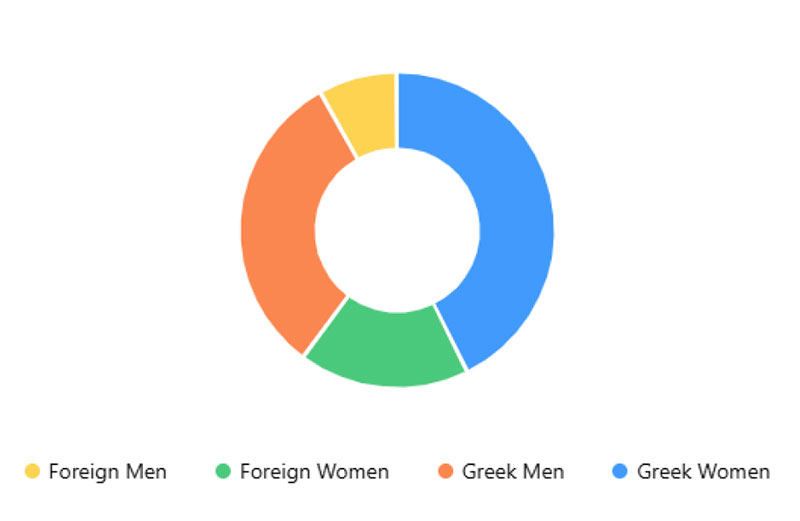
- Greek Women: 22
- Foreign Women: 10
- Greek Men: 15
- Foreign Men: 5
- Total Employees: 52
5. Environmental Actions and Biodiversity Protection
As part of its commitment to environmental protection and responsible tourism, Enorme Santanna Beach implemented and supported several environmental awareness and biodiversity initiatives during the reporting period.
Beach Clean-Up Activities
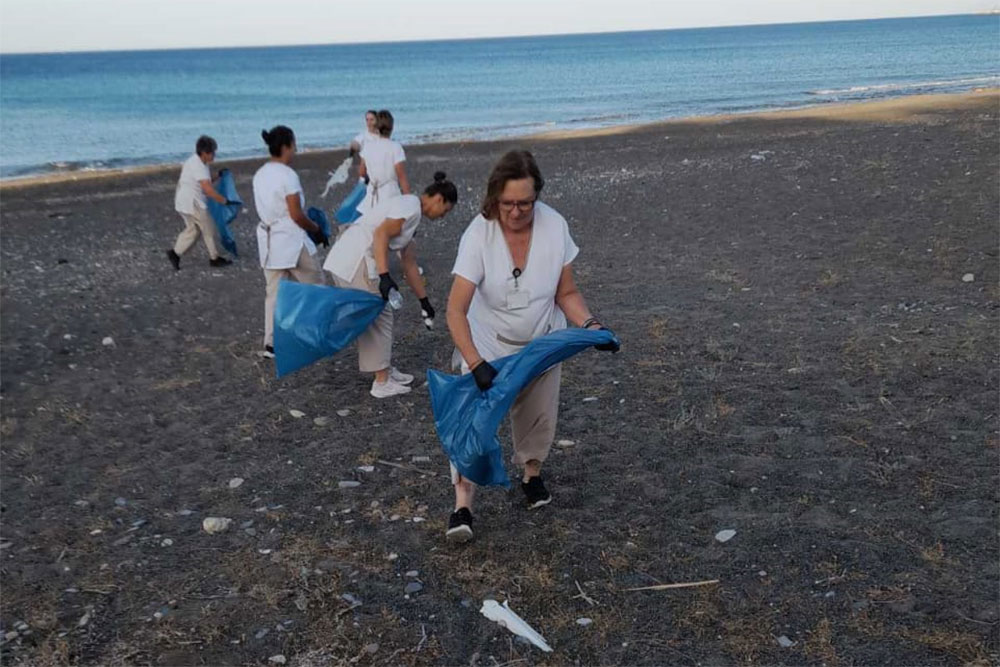
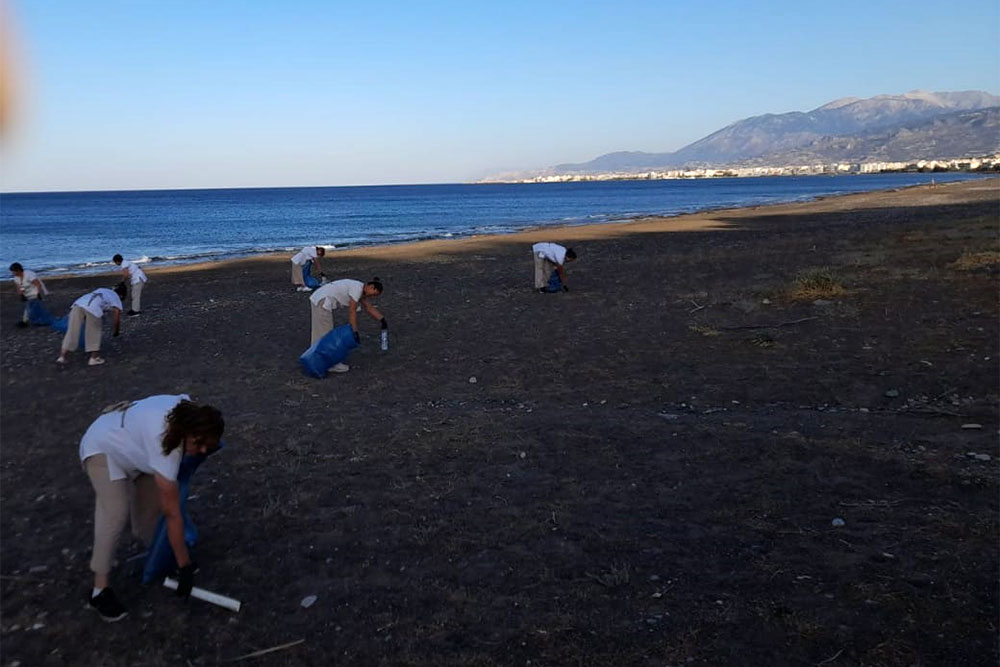
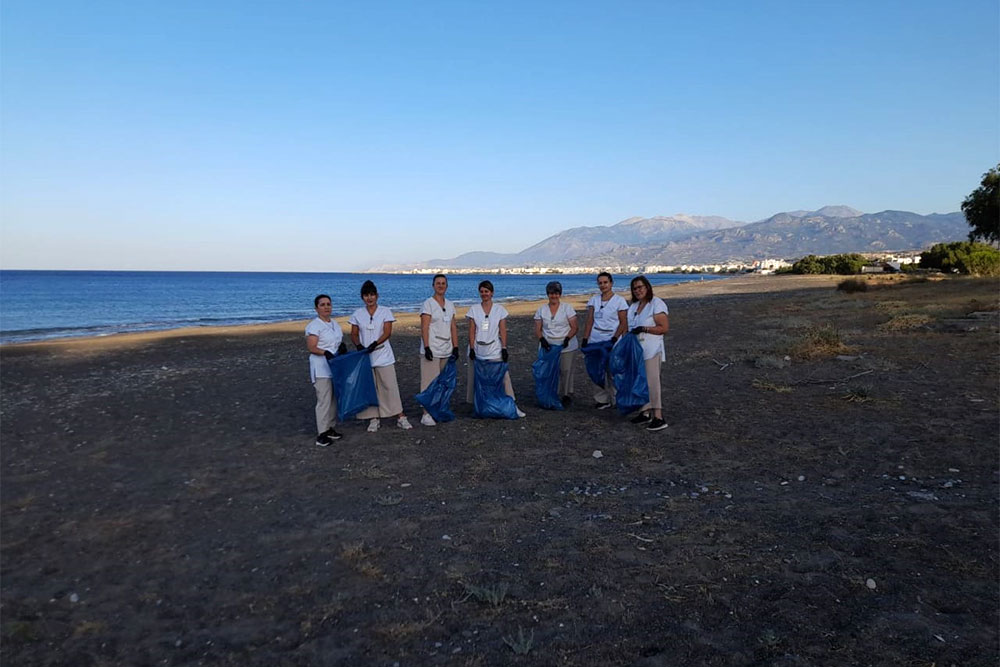
Hotel employees participated in organized beach clean-up activities in the area surrounding the property. These actions aimed to remove litter and marine debris, protect the coastal environment and raise awareness among staff and guests about the importance of preserving natural ecosystems. The initiative contributed to improving the local environment and reducing the impact of waste on marine life.
Protection of Sea Turtles (Caretta caretta)
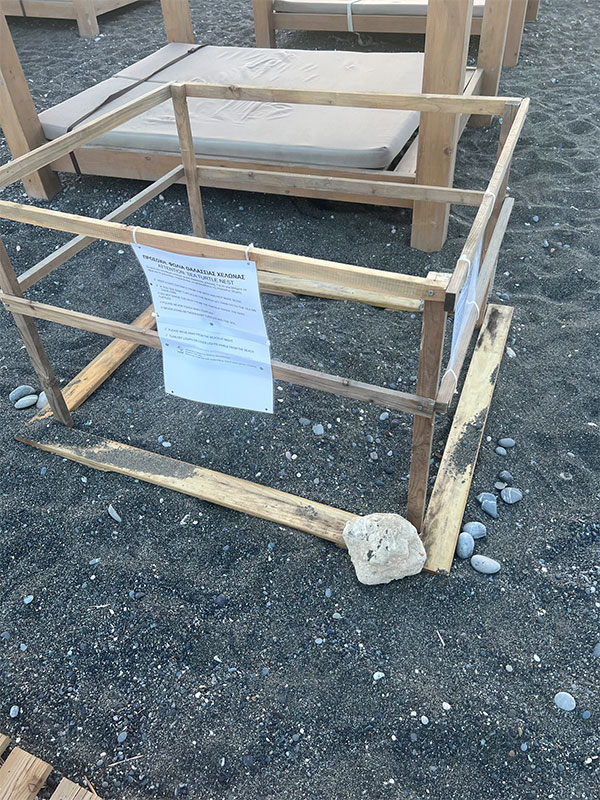
The hotel actively supports the protection of the endangered loggerhead sea turtle (Caretta caretta), which nests on beaches across Crete. Information is provided to guests regarding the ecological importance of the species and the need to protect nesting areas and marine habitats. Through awareness initiatives and environmentally responsible practices, the hotel contributes to the conservation of local biodiversity and the protection of marine ecosystems.
Promotion of Native and Mediterranean Plants
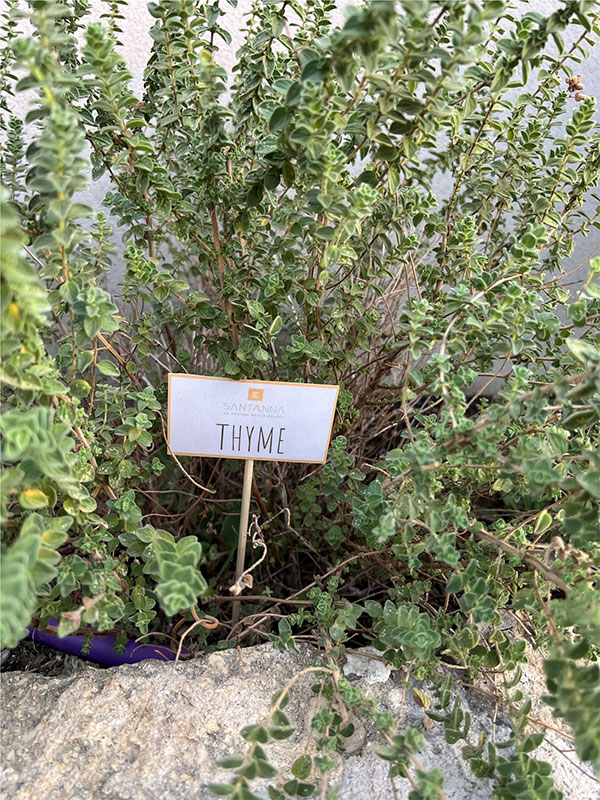
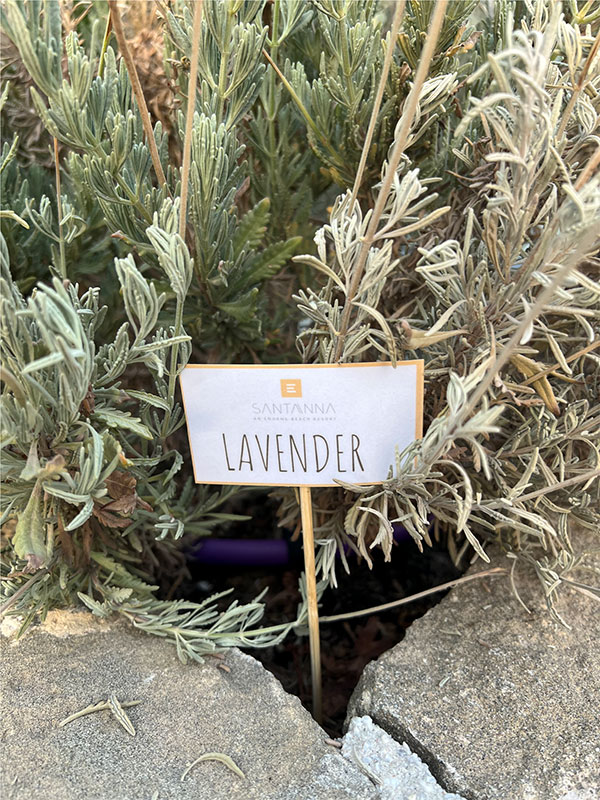
The hotel promotes the use of native and drought-resistant Mediterranean plant species within its landscaped areas, including aromatic herbs such as thyme and lavender. These species are well adapted to the local climate, require less irrigation and contribute to the conservation of local biodiversity. Informational signs have been installed to help guests learn about local flora and its environmental value.
Guest Awareness and Participation
Guests are encouraged to participate in environmental initiatives through sustainability information available at the hotel, including guidance on responsible waste management, biodiversity protection and sustainable tourism practices. Awareness materials and environmentally themed information are displayed in guest areas to promote responsible behaviour during their stay.
Through these actions, Enorme Santanna Beach continues to support biodiversity conservation, environmental education and the sustainable management of natural resources.
6. Achievements During 2025
- Completion of the Annual Sustainability Assessment and Sustainability Action Plan.
- Monthly monitoring of environmental indicators through EPIT.
- Improvement in greenhouse gas emissions performance per guest night (-10,30%) compared with the previous reporting period.
- Continued monitoring and improvement of water consumption efficiency.
- Organization and completion of beach clean-up activities involving hotel staff.
- Implementation of biodiversity awareness initiatives related to the protection of Caretta caretta.
- Promotion of native Mediterranean plants and environmental interpretation through guest information signage.
- Guest participation in environmental awareness activities and sustainability initiatives.
- Ongoing support of local suppliers, local employment and community initiatives.
- Continued implementation of sustainability awareness training for employees.
7. Areas for Improvement
- Further reduce energy consumption per guest night.
- Improve water efficiency and monitoring accuracy.
- Increase recycling rates.
- Reduce mixed waste and food waste.
- Expand sustainability awareness training.
8. Objectives for 2026
| Objective | Action | Responsible | Deadline |
|---|---|---|---|
| Reduce energy intensity per guest night by 1,3% | Monthly monitoring and implementation of energy efficiency measures (AC control, preventive maintenance, staff awareness) | Maintenance Manager | Dec 2026 |
| Improve water management and reduce water consumption per guest night by 4% | Monthly internal meter readings, leak detection, and irrigation optimisation | Maintenance Manager | Dec 2026 |
| Increase recycling rate by 0,5% | Improve waste separation procedures and staff training | Housekeeping Manager | Dec 2026 |
| Reduce GHG emissions per guest night by 1,1% | Monitor emissions through EPIT and implement energy-saving measures | Management | Dec 2026 |
| Achieve 100% staff participation in sustainability training | Annual sustainability training programme for all departments | HR / Management | Dec 2026 |
9. Progress Against Previous Sustainability Goals
| Goal (2024) | Target | Result 2025 | Status |
|---|---|---|---|
| Reduce water consumption per guest night | Reduce water consumption per guest night by -5% | +3,7% raised | Not Achieved |
| Improve waste separation and recycling | Increase recycling rate by 5% | New waste management plan implemented | Achieved |
| Increase staff sustainability awareness | Increase staff sustainability awareness by 50% staff participation in training | Training completed for all departments | Achieved |
| Promote biodiversity and environmental awareness | Promote biodiversity and environmental awareness Implement at least 1–2 initiatives per year | Beach clean-up and Caretta caretta awareness activities completed | Achieved |
| Support local employment and diversity | Support local employment and diversity | Maintain ≥60% local staff & ≥50% female representation | 52 employees, 61.5% women, 28.8% foreign employees | Achieved | 52 employees, including 15 foreign employees and 61.5% women | Achieved |
10. Progress Against Previous Sustainability Goals
The hotel reviewed the sustainability objectives established during the previous reporting period and assessed progress achieved during 2025.
| Previous Objective | Progress Achieved in 2025 |
|---|---|
| Reduce water consumption per guest night | Water consumption per guest night decreased from 5.34 m³ to 4.79 m³, representing a reduction of 10.3%. |
| Improve waste management and recycling performance | An updated Solid Waste Management Plan was implemented and waste streams continued to be monitored and separated. |
| Increase staff sustainability awareness | Sustainability training and awareness activities were delivered to employees throughout the season. |
| Promote biodiversity protection and environmental awareness | Beach clean-up activities, Caretta caretta awareness initiatives and promotion of native Mediterranean plants were implemented. |
| Support local employment and workforce diversity | The hotel employed 52 staff members, including local and international employees, while maintaining equal opportunities and diversity principles. |
The hotel will continue monitoring these objectives and establish new improvement targets for the following reporting period as part of its Sustainability Action Plan.
11. Management Statement
Management has reviewed the results of this report and confirms that its findings have been used to establish objectives and actions for the next 12 months. The hotel remains committed to continual improvement and responsible tourism.
FIND US
